
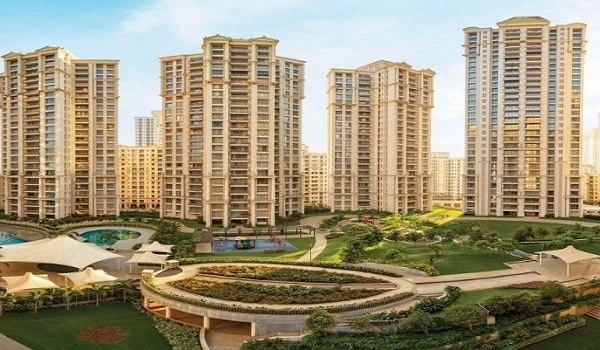
India’s real estate market is growing, but is it growing for everyone?
Over the past few years, the Indian housing market has witnessed a noticeable shift. Luxury apartments, premium residences and high-value developments are attracting significant attention from both developers and homebuyers.
Bigger homes, exclusive amenities, premium locations and aspirational lifestyles are increasingly shaping the residential real estate landscape.
But somewhere amid this premium housing boom, an important segment seems to be losing ground: the middle-class homebuyer.
And this raises an important question: Are we building enough homes for the people who aspire to own one, but cannot afford to spend crores on it?
The Changing Landscape of India’s Housing Market
The numbers tell an interesting story.
According to Knight Frank India’s India Real Estate: Office and Residential Market H2 2025 report:
- Sales of homes priced below ₹50 lakh declined by 17% in 2025.
- New launches in this segment fell by 28% during the same period.
- In contrast, sales of homes priced above ₹1 crore increased by 14%.
The trend continued into 2026. During the first half of the year, homes priced above ₹1 crore accounted for 54% of residential sales across India’s eight major housing markets, compared to 49% in the corresponding period of 2025. Meanwhile, affordable housing sales declined by another 15% year-on-year in H1 2026. These figures point towards a changing housing market, where premium properties are gaining a larger share while affordable housing faces increasing pressure. The question is not whether luxury housing should grow. It absolutely has its place. The bigger concern is whether the growth of premium housing is leaving enough room for people looking to purchase their first home.
The Middle-Class Homebuyer’s Dilemma
Think about a young professional who has just started building a career.
Or a couple who has spent years saving for their first home. Or a family with a stable income that wants to move from renting to owning a property.
They may not be looking for a luxury penthouse, a private swimming pool or an elaborate clubhouse.
Their expectations might be much simpler:
- A well-planned 2BHK or 3BHK apartment.
- Good construction quality.
- Convenient access to workplaces, schools and healthcare.
- Reliable public transport and essential infrastructure.
- A safe neighbourhood and a reasonable price.
Yet finding all these things within a realistic budget is becoming increasingly challenging in many urban markets.
Property prices, land costs, construction expenses and changing development patterns have made the economics of affordable housing more complicated.
For many aspiring buyers, the challenge is no longer just finding the right home. It is finding a home that fits their financial reality.
And when the gap between income and property prices continues to widen, homeownership risks becoming an increasingly distant aspiration.
Why Are Developers Moving Towards Premium Housing?
It is important to understand the developer’s perspective, too.
Real estate development involves substantial investment, land acquisition, construction costs, regulatory approvals, financing and infrastructure expenses.
At the same time, developers need to maintain commercially sustainable margins.
Premium projects often offer better revenue potential, making them an attractive proposition for developers and investors.
This does not necessarily mean that developers are overlooking middle-class buyers deliberately. Rather, the economics of developing lower-ticket housing have become increasingly challenging.
However, if the market continues to favour higher-value developments, the availability of homes across different income segments could become increasingly imbalanced.
The industry needs to recognise that a healthy housing market cannot depend on a single price category.
How Can India Make Affordable Housing Viable Again?
Affordable housing needs more than good intentions. It needs a development ecosystem that makes such projects financially and operationally sustainable.
Here are four areas that deserve greater attention.
1. Location Should Be Part of Affordability
A property may appear affordable because it is located on the outskirts of a city. But if residents have to spend hours commuting every day, the actual cost of living increases.
Affordable housing should be developed with access to employment hubs, schools, healthcare facilities and public transport in mind.
A reasonably priced home should not come at the cost of everyday convenience.
2. Make Affordable Housing Economically Sustainable
Developers need a viable business model to invest in this segment.
Better access to suitable land, improved infrastructure, faster approval processes and meaningful policy incentives can help reduce development costs and encourage more participation.
The objective should be to make affordable housing commercially attractive without compromising construction quality.
3. Focus on Practical Design Over Unnecessary Luxury
Not every residential development needs extravagant amenities.
Well-designed layouts, efficient space utilisation, practical configurations and quality construction can deliver a comfortable living experience without unnecessarily increasing the overall project cost.
The focus should be on what homebuyers genuinely need rather than what makes a project look premium on paper.
4. Encourage Collaboration Across the Real Estate Ecosystem
Affordable housing cannot be addressed by developers alone.
Government authorities, financial institutions, urban planners, developers and real estate professionals all have a role to play.
Better financing options, effective housing policies, infrastructure development and responsible project planning can collectively improve access to homeownership.
A Housing Market Should Have Room for Everyone
India’s real estate sector is evolving, and the growth of premium housing reflects changing aspirations and market opportunities.
But growth should not be measured only by the number of luxury projects launched or the rising value of residential transactions.
It should also be measured by how effectively the housing market serves different income groups.
At Sovereign Assets India, we believe that real estate growth should be viewed from a broader perspective. A strong housing market is one that creates opportunities across segments, understands changing buyer needs and recognises the importance of accessible homeownership.
The middle-class homebuyer is not asking for extravagance. They are asking for a fair opportunity to own a well-built home in a location that supports their everyday life.
And that is a segment the industry cannot afford to overlook.
Because ultimately, the success of India’s real estate sector should not just be about how many premium homes we build.
It should also be about how many Indians we bring closer to the dream of owning a home.
The Bigger Question
Is affordable housing still commercially viable for developers in today’s market? And what changes would encourage the industry to invest more in this segment?
We believe this conversation deserves more attention.
What do you think the future of affordable housing in India looks like?

Join The Discussion